Marketing Week - News

Friday, 30 April 2010

The 15th - Final Blog


Reflective summary of the Blogs

The blogs were an excellent opportunity to learn about marketing in a different way rather than writing a report on it. “A blog is whatever you want it to be. There are millions of them, in all shapes and sizes, and there are no real rules.

In simple terms, a blog is a website, where you write stuff on an ongoing basis.” (Blogger.com 2010)

I would more than likely use the blogs tool again.
The tool which was used for this blog was blogger.com. It is very good and simple to understand. The best thing about blogs is that they are personal to the person and they help get my personal point of view across.

I actually did not know that businesses also use blogs for their business. I may use the blogs designed by the businesses to find out information about the blogs.
Blogs are a very good way for businesses to make their products popular and they help promote the business. There are some 9 million blogs out there, with 40,000 new ones being created every day. This shows they are very popular. These are the businesses that use blogs in their business to promote. Marketers also use blogs to advertise their products and give information on the latest deals the business is doing.
• General Motors - Vice-Chairman Bob Lutz launched his own ‘FastLane’ Blog. The blog helps clear up the bad press the business may get in the future. It also helps the business promote their latest products and give links to reviews of their products.
• Amazon – They use blogs to let their customers get involved in discussions about the latest developments and what the new things they are looking to do with the website.
• Google – has a small area where people can post their views about the business and they may also give feedback to Google about their business. It is a more interactive blog, with polls conducted about the website.


Blogs are increasing rapidly and many businesses are using blogs to catch up with the Internet age. Many people now have Internet and blogs are a very good way of meeting the target audience. Many people don’t like to read a lot but blogs can be about everything. They can be just videos used for viral marketing campaigns or information blogs, giving details about the company’s products. So this is why they are increasing so fast.
Blogs were also a very good at improving IT skills and a person with very low IT skills can use them. The most important things about blogs is that they are personal and the person can visit them as much as they like. They are also interesting and they will help the reader as well as the writer learn. Some people like to use videos as their learning tool and blogs consist of good videos which illustrate examples given. Some people may hate reading from books and learning so these blogs summarised the content in the books and involved theory as well as interesting examples.
The strengths in the process were:
• The blog is personal and after the lecture the student will go home and blog about the topics covered
• Many students just go to the lecture and then forget about it, the blogs are a very good chance for them to revise this and then learn better from them
The weaknesses may be:
• The blogs can be repetitive work and many people will not concentrate on them as much
• Some of the topics are boring and not easy to discuss

The blogs helped to get the personal point across so they were a good experience. Many things were learnt from it and if given another task it would be great if it involved a bit of blogging. Many people at first did not even know what a blog is so they were stuck at the start but when they got started, it was easier. Thinking of blogs being interesting, many people may actually start a blog on a subject they find interesting.
Overall I enjoyed the blogging assignment and I would do it again! It helped me in many ways and helped me to learn about the subject in a better way. They were time consuming but they were also a goo learning tool.
I have also learnt that you can make money from blogs! This is a good discovery and for those of you who want to know how, check out this video:
THANKS VERY MUCH for your interest in my blog!

Tuesday, 27 April 2010

The 14th - Generational marketing


Generational marketing is 'the method of marketing to a specific generation is affecting the way that we promote and sell products and services. We are all a product of our generation. Each generation have their own characteristics, because of this as a marketing target we can usually categorize by generations by the way that we act and speak as well as our belief systems.'


There are four different generations advertisers market to:
1.Millenials or Generation 2001ers, born after 1980 - Millennials are from the age group of 7 to 27 years old. This group is basically young children to young adults. They have grown up in the technology and love their computers, iPods etc.
This advert I think is very good for the younger generation. Firstly its for a games console and a very popular game so this generation is familiar with this technology. Also the advert has humour and it is good at making people remember the advert.

2.Baby Busters or Generation Xers born between 1965 and 1980 - Generation X are between the age of 28 to 48 years. They have grown up through the 70s and through the financial boom of the technology bubble. This advert below is good, I think, for this generation, I think most men this age would have young children so this advert will be good for this generation.


3.Baby Boomers born between 1946 and 1964 - These sound like they are babies but this generation is basically between the ages of 49 to 66. They have grown up through the 60s and have seen some of the greatest pop bands in their time.


4.Mature Citizens born between 1909 and 1945 - this is the oldest generation, these are over the age of 60. These are the people who have grown up through the Second World War, this is the only major event which happened in their young generation but they have lived through everything all the other generations are going through. So they are the most experienced and wiser in my opinion. So the best advert, for them I think would be the Hovis advert. It shows the last 122 years. I'm not saying they are that old but they have lived through and some have personally experienced some of the events.


The 13th - Perception Experiment

Product packaging


For the perception experiment in the lecture, our group decided to to a product packaging test for this. It was a good experiment because it helped see how packaging effects the buyers decisions.
The reason for doing this was to see if factors apart from taste really affect our purchase decisions when we buy something or whether it was other perceptions that influence the purchasing decisions These are the chocolates we decided on as a group.


The structure of the expeeriment was that we would show the people the packaging and imagine they had never ate the chocolates before, which one would they go for. This should show us which chocolates people choose based on just the packaging. For example if some one is buying a particular chocolate for the first time, what would attract that customer to buy that particular chocolate?
From the results, we saw that if they were buying the chocolates for the first time, they would buy the Divine. This they said is because the packaging looks very good and they woul want to buy it.
There was, however, one problem with the experiment, many of the people in the class had already ate the chocolates so there was a bias towards the certain chocolates.


Product packaging is very good at genmerating popularity for the product. If you stripped the label off a traditional bottle of Coca-Cola -the curvy, small container-everyone would still know what it was.

So product packaging is very important and marketers will ahve to design their packaging to fit their target audience. If the product is good and the packaging is rubbish, the product will not attract as much attention as it would have with eye catching one.

Sunday, 25 April 2010

The 12th - Social Class

Social class is "a division of society made up of persons possessing certain common social characteristic which are taken to qualify them for intimate.." Krech (2000). This means that there are groups in society which are classed one above the other.


This diagram is not very clear but it basically shows how social class has changed from previous years to today. In the past, there were mainly three groups, the upper, middle and lower class. Now it is not that simple, there are also sub groups now and it is harder now to class people, as to which group the belong to.


Here is a video, which describes simply what social class is.


This video shows what is generally shown in families of the upper, middle and lower class. The lower class is usually stereotyped at having more children, marketers can use this to their advantage as they will be able to offer good deals for the family and extra discounts if they bring children. The husband and wife are usually not living together, so marketers will have to find ways of getting the families back together and this will get them to spend money on the marketers products. Generally the lower class do not have alot of money so they will look for value rather than quality.


This advert from Asda shows that every family will want to celebrate Christmas but not all have tonnes of money. Asda are offering cheaper alternative to high quality so this advert is targeting the lower class.


This Christmas advert from M And S is, I think, tageting the middle class. It does not involve price too much and it is a little more about quality then value. At one point it Wallace actully mentions 'lots of stuff delivered to your door', I think this is a good point to mention because middle class people like abit of luxury with their purchase and this would be a good example.


This advert from Harrods is a good examaple of what upper class people like. There are no prices mentioned in it and its alot about quality. Upper class people like their to be a lot of luxtury and quality.

Saturday, 24 April 2010

The 11th - Marketing for Children


Marketing to children is a very good way of getting the children to nag the parents until they become so enraged that the only way to stop the children is to actually do what they want. Marketers use adverts which only target children, even though they may only have a few quid saved up under their mattress. But the reason is because as said in the previous blog, children are a very good way of getting the par tents to spend their money.
This is data from Mintel and it shows the facts and figures related to the children's market.

Toys 2008 Market size (2007) £2.2 Bn
Comics 2008 Market size (2007) £129M
OTC Kids Medicines (2009) £203M

Pocket Money 2008
The vast majority of children are not just reliant on a single source for their pocket money, but receive additional funds from other areas.

This data will be very useful to marketers because it shows how big the market is. The interesting fact is that majority of children actually get their pocket money from not just one place. The market for toys is at over £2 billion so it is a huge market in which marketers have to take advantage.
When it comes to advertising to children, I think the best adverts are TV adverts. This is because children tend to watch TV the most compared to magazines or newspapers.


This, I think, is excellent in getting children to force their parents to take them to Lego Land. The advert itself is not spectacular but the content is good. Which child would not want to be a hero? But not only is the advert meeting the needs of the children, it also has an incentive for the whole family, so it is cheaper if the whole family goes.
This advert is mainly targeted at male children, here is an advert which will be targeted at girls.


Marketers also use cartoon characters to influence young children, a cartoon is very likely to catch the attention of children.
If marketers can influence the children with a character from a TV show. Children will recal the charaters and then remember the adverts because of that. Marketers are also using the Internet for promoting. One website would be http://www.barbie.com/, they have got games, videos tec all to promote the barbie brand.

Sunday, 28 March 2010

The 10th - Family

Family is very important to everyone and people would class family as one of their most most important values. Therefore family plays a huge part in purchasing decisions. The biggest decisions are always made through the family, for example if they are planning a holiday, they will all have to sit down and decide what to do. This is for big decisions, mind you my sister and mum always seem to get into a fight over which apples to buy, so marketers will have to decide how they can offer each member of the family a benefit. If one member is not happy then they will not agree, for example if the theme park they are going to does not have any thriller rides, then the teen in the family may not agree to going to that particular park. Marketers will have to pounce at family advertising because this, I think, is a massive way of generating popularity for the adverts. The adverts for family's will be general so most members in a family will find relevance to themselves. The reason way I think advertisers will have to take this seriously is because each member of the family may tell one of their friends and then so on. This would help spread the advert and gain popularity for the particular product.

I think this advert below shows exactly what I mean by this:


This is a good advert because it targets the whole family, after seeing this ad and actually going to eat there. Many family members will tell their friends about the deal so more people will receive the information. But if it was targeted at the males, they would only tell their friends thus targeting the whole family gets the advert further.

This is another advert which I think meets the needs of the whole family.


There are also different types of family so not all family adverts will necessarily effect all.
Nuclear Family - father, mother & children who live together

Extended Family - nuclear family plus other relatives such as grandparents, aunts etc.

Family of Orientation - the family you are born into

Family of Procreation - the family founded through marriage

This is generally how the decisions in the house are made.
Family is very important to everyone and people would class family as one of their most most important values. Therefore family plays a huge part in purchasing decisions. Marketers will have to pounce at family advertising because this, I think, is a massive way of generating popularity for the adverts. The adverts for family's will be general so most members in a family will find relevance to themselves. The reason way I think advertisers will have to take this seriously is because each member of the family may tell one of their friends and then so on. This would help spread the advert and gain popularity for the particular product.

So the decisions in the household would be made like this, apart from the video game I think now there is more of a mixed decision on the diagram above, like with the colour TV the children will definitely make sure their say is heard in the matter and may even get to make some decisions. Like when we got a TV recently, my little brother and sister just had to keep saying they want this and this and this and this... in the end my dad let them choose the one out of 3 or four he couldn't decide between them!

Tuesday, 23 March 2010

The 9th - Values


"Values are our ideas about what is desirable". Wilkie
“If we believe our overall values drive our behaviour, then we should be concentrating on the important, underlying motives that drive consumers to make product or service choices rather than simply product attributes” (Ries & Trout 1982)
I think value is what we hold important to ourselves, to some people certain things are of very much value and to other people those exact things may not be of any importance at all. Many people will find family to be important to them. Some will see other things as of great importance to them:

1. Self Respect
2. Excitement
3. Being Well Respected
4. Self-fulfilment
5. Sense of accomplishment
6. Warm relationship with others
7. Security
8. Fun & enjoyment
9. Sense of belonging
A wife might find that a good relationship with her husband is of importance and value to her. Marketers can use this and they may have adverts which target husbands and wives. This would be a good advert for a wife!
This advert is clearly targeting a wife. It is also meeting the need of a wife and also the values of a women, i.e. I don't want to make a sweeping comment but she would want her husband to do the cooking for once as she might do it usually. This advert from IKEA would, I think, definitely get the women interested and she will be interested in the product.

Sunday, 21 March 2010

The 8th - Memory


Memory in marketing means, for example adverts we see on television or newspaper, will we remember them or not. Marketers have to try and make sure they get the image or soundtrack stuck in the audiences mind so they will remember their advert.
Britt 1955 states that "every time an advertisement or commercial appears, the objective is to have the reader or viewer learn something and remember what they learnt".
This quote above shows exactly what a marketer has to do, they have to use some sort of stimuli to get the person to remember their ad. In my opinion, the best one is music. If an advertiser uses good music, which will stay in the persons mind, they will have a good advert because then they will be able to get the person to recall the advert often and thus generate sales.

This video shows exactly how powerful TV advertising is this guy seems to remember all the famous TV adverts from the past.


Marketers will have used things out of the ordinary when they designed these adverts and it caught people attention. For example the Cornetto advert shows exactly how the out of ordinary music is used. We tend only to remember the strange things whenever we see them. So this is a good tool when it comes to advertising and getting people to remember adverts.
Talking of unusual adverts, this one below from Cadburys really gets the person thinking, 'what on earth has this got to do with chocolate'. But this is the reason people will remember it and they will talk about it.


This advert, I think, really gets the point across. People will talk about it alot because it is a strange advert and people will be able to recal it easily.

Nostalgia
"Nostalgia is a "sentimental longing for earlier days when summers were hotter, days were longer, food was tastier and people were friendlier, lends itself to some traditional, long-lasting brands that many consumers remember from childhood" (Wright, R. 2000)

Some adverts are very good in using nostagia. They will show a clip that they think will bring back the memories. Below is a clip of what I think is a good example of this sort of advertising.


This advert may use nostagia, the lady is eating chocolate in the ad so some people will recall eating chocolate and they may recall the taste. This may make them want to buy the product.

Saturday, 20 March 2010

The 7th - Groups and Peer Pressure


A group is two or more individuals who
–share a set of norms,
–have role relationships,
–and experience interdependent behaviors.


In the lecture we disscussed what the main groups are in society. The first one which was talked about was the Burbury group. This group of people is often compared with 'chavs'. Below is a video which I think shows exactly what a chav is.
Take a look.


We all have certain groups we belong to, these people belong to the chavs group. They, in my opinion, are more likely to be influenced by peers because they tend to socialise the most as they have no jobs.
When we are in a group we tend to spend more money, this may be because when we are with friends we tend to just enjoy ourselves and more watch the money as much as we would if we were alone. Also we may think its a one off so we tend to spend more money. Marketers will take advantage of this by having deals in which there are discounts when you bring more people.
There are certain groups which we would not want to belog to, chavs being one of them. A famous brand which was targeted at 40 year old males has not really found the group it was ment to target because I have seen many people my age wearing Levis jeans!

With regards to groups and peer pressure, I think this is a very relevant story.
The story of the monkeys:

Start with a cage containing five monkeys.

Inside the cage, hangs a banana on a string and place a set of stairs under it.

Before long, a monkey will go to the stairs and start to climb towards the banana. As soon as he touches the stairs, spray all of the monkeys with cold water. After a while, another monkey makes an attempt with the same result - all the monkeys are sprayed with cold water. Pretty soon, when another monkey tries to climb the stairs, the other monkeys will try to prevent it.

Now, turn off the cold water.

Remove one monkey from the cage and replace it with a new one.

The new monkey sees the banana and wants to climb the stairs. To his surprise and horror, all of the other monkeys attack him. After another attempt and attack, he knows that if he tries to climb the stairs, he will be assaulted.

Next, remove another of the original five monkeys and replace it with a new one. The newcomer goes to the stairs and is attacked. The previous newcomer takes part in the punishment with enthusiasm.

Again, replace a third original monkey with a new one. The new one makes it to the stairs and is attacked as well. Two of the four monkeys that beat him have no idea why they were not permitted to climb the stairs, or why they are participating in the beating of the newest monkey.

After replacing the fourth and fifth original monkeys, all the monkeys that have been sprayed with cold water have been replaced. Nevertheless, no monkey ever again approaches the stairs.

Why not?

Because as far as they know that's the way it's always been around here….


Thursday, 25 February 2010

The 6th - Enterprise Week activities


During November last year, the marketing students participated in this event and I think it was good for everyone as it got the students to meet outside people from the industry who we normally would not get to meet. The chance to speak to all these people is a good experience and many people would have enjoyed it.


The events which I was able to attend were 'Telling it Like it is' and 'Transmitting Information is easier than creating understanding'. We went with friends so there was less listening and more talking and drawing on books. But there was some very useful information which came out of these events. I think the best event will have to be the 'telling it like it is' because there were people from leading companies their and they helped to show us what it is like working in these companies and how did they get their. They were ex-students of the Uni so they had a viewpoint of the audience so it was easy to understand.
Here is the people who were at the event;

1.) Sue Elms - She is the Executive Vice President of Global Media Practice Millward Brown
http://www.millwardbrown.com/Home.aspx

2.) George Hutchinson - He is the Chair and Managing Director of Public Affairs for Burson-Marsteller UK
http://www.bursonmarsteller.co.uk/index.php

3.) Sue Unerman - She is the Chief Strategy Officer for MediaCom
http://mediacom.com/

4.) Matthew Chapman - He is the International Service and Systems Innovation Director for Billets
http://www.ebiquity.com/uk/billetts/

5.) Rik Haslam - He is the Group Creative Architect for WWV Rap
http://www.rapp.com/home/

This event was basically a long discussion about several marketing topics. They talked about how marketing communication has changed and how the Internet has taken over. From my friends notes (we made him write all the notes!) it was said in the panel that 80-85% of marketers have started to use mobile marketing through the Internet. This is a very good statistic and shows how the marketing communications are being developed everyday and many marketers have to keep up with the latest technology and they have to see how they can cover the most number of customers.
After the first discussion, a student from the third year did a presentation about the Internet and how marketers are using the Internet. He mentioned about 9 billion adverts appear on the most visited site on the Internet, Google.
After this, brands were discussed. They discussed the fact that customers want value and high quality. The price interestingly they said is not a massive factor in deciding what to buy, it just has to be of good quality and of value. (Maybe they said this because they are rich)They also said packaging is a good point to mention when discussing brands, for example Asda smart price range has very basic packaging but the higher range has better colors. But they also mentioned the fact that just because the packaging is bad does not mean the product is not popular so the brand has more to do with it then the packaging. I learnt a lot from these discussions and the opportunity to meet these people was very good as it was a good experience. The notes also helped with another piece of coursework and I may use them in the future.
Another event in the three weeks was the Apprentice challenge. 6 people from our class actually won this challenge so Ruth was really proud. We were not able to enter because of one of the group members being ill.

Tuesday, 23 February 2010

The 5th - Gender


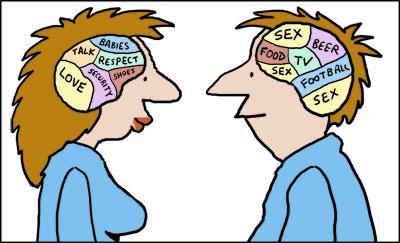
Gender is one of the most widely used ways of targeting customers. It is sometimes very easy to distinguish which ads are for males and which are for females.
Males and females will respond differently to certain things:

Men make buying decisions based on partially digested information
Less patience with long copy
Less disposed to pictures
Look for clarity and simplicity
Fewer men’s lifestyle mags than women’s lifestyle mags
Men to be relatively obsessive and have narrowly defined hobbies – reflected in media choice
Men look for humour in ads
Men’s humour is cruder and likely to be more aggressive.

These above are the characteristics of men when it comes to buying and their behaviour towards adverts.
Schiebe and Condry (1984) examined advertisements according to product type and found major gender differences in the values promoted in advertisements. This shows that there is always major differences in the way in which advertisers promote their products. Look at the two adverts below, which is targeted at male and which at female? It will be very easy to distinguish. After seeing them, play both at the same time and you will see the difference!


This is how adverts differ with males and females:
For women:
ads often are more detailed. eg toiletry ads.
women appreciate very fine distinctions, such as 5 different variations of shampoo-for curly hair, straight hair, oily hair, dry hair, etc.
For men:
Toiletry ads focus on a single product.
Men are likely to pick up on one or two very salient and obvious kinds of cues. (Free)
Men think in a more macro way, and need to be shown the big picture.

From the two videos, it is easy to see that the Loreal advert, is for women. The above points show that women like very fine distinctions, and in the advert, Cheryl Cole says that, the shampoo is for 'limp, lifeless' hair. This goes with general marketing theory that women like the little things and the distinctions.
Men, on the other hand, like there to be more humor and need to be shown the bigger picture. In the advert, this is clearly shown and fits with the theory.
So I would say they are very good adverts for their own gender, if you showed the Loreal advert to a man, he would most likely just concentrate more on Cheryl Cole then the product. If you showed he Yorkie advert to a women, she would not like it and most probabbly try and sue you for showing the video to her!

Tuesday, 2 February 2010

The 4th - Personality and Self-concept

Dr. Joyce Brothers, a famous psychologist once said:
“An individual's self-concept is the core of his personality". (Dr. Joyce Brothers 1960)
Self concept simply means what one person thinks of themselves. For example a young person would think differently of themselves then a older person, this would be because of age but there may be many reasons why a person thinks in a certain way about themselves. The main ones I think could be:

Age and Gender

Culture

Background

Income

Lifestyle


These would be the main ways in which a persons self image is constructed. Age is an obvious reason why some people think of themselves in certain ways. My grandad always says to me, 'Im old so I cannot walk to your house everyday, even though he is there every week! But this is the self image he has of himself. Looking at what a young person would think of themselves, my younger cousin is a prime example. Many times he says to me he can drive a bus, just because his father is a bus driver! Trust me he can't! This is just the concept in which he thinks and this should change with age. (Hopefully!) One way in which marketers and product developers can take advantage of this is through targeting young children with small cars, I mean toy cars not Minis! This would be taking full advantage of this market because many children would make their parents buy these.


Some peoples self concept is negative and some people's positive, a person who has a negative self concept will spend more on cosmetics and jewellery. A person who has a positive self image will most likely in my opinion spend more money on cars, their house and things like that.


Marketers can use this to their advantage, like the boots 'here come the girls' advert is for girls who think they have to wear make up to look good. This advert will target these sort of people. So self concept is very important in the way marketers plan their adverts, generally, people of a certain age and gender will have a certain image of themselves. For example, males around the age of 40 will say they are lazy, this is in general. Advertisers will have to meet this by designing ads which will fit the self image of certain people:

Take a look at this ad designed to get people out of their chairs and get active.


This ad, I think will be very good in influencing people to get out of their chairs and actully do something active. It fits the profile of males and it fits their self concept. If you have any questions about self-concept contact the lady in the above picture.

Sunday, 10 January 2010

The 3rd - Segmentation, Targeting and Positioning

This is a very important part of marketing, before the marketer plans to promote a certain business or product, they will have to see how they will segment the market and who their target market is. This is where STP comes in, only after the marketer has an idea of who the target market is and how the market is segmented, they can develop better ways of communicating with the customers. With STP, the marketer can also differentiate their tools of marketing and target specific groups of customers with the tools appropriate for that audience. This helps get the best responses from the customers.

Segmentation, in marketing, is the dividing of the customer base to target different groups of people. Marketsegmentation.com offers a professional definition of exactly what it is.
"Market segmentation is the process of splitting customers, or potential customers, in a market into different groups, or segments, within which customers share a similar level of interest in the same or comparable set of needs satisfied by a distinct marketing proposition".
So simply it is the splitting up of groups of customers to better satisfy their needs. For example there would be different ads to target a 15 year old then to target a 50 year old. So age is one of ways in which marketers can segment the market. This takes to how the market can be segmented, these are the ways in which they can be segmented:

• Age
• Income
• Social Class
• Gender
• Personality
• Lifestyle

If you didn't like the text explanation of market segmentation, how about a presentation video!?

It has no background music but it does get the point across!


This basically explains the concept of segmentation and how businesses segment the market to meet different customers' needs.

Market Positioning

Market positioning is the way in which a marketer positions his/her business to attract attention to the business from possible customers and existing customers.
The main reason why a business would position itself in the area it has would be because there is a need for the product in that market. If there is a need for the product then there will be a demand and thus the business would profit from this.
The advantage of positioning is that businesses can find parts of the market in which there are gaps and thus they can fullfill the customers needs with this. Without this, the business will have to offer something different then the existing products in the market.
Maybe this guy explains the concept a little better!
Take a look at the video.


This person is obviously an expert in the field. Its the best video I could find quite frankly.

Tuesday, 5 January 2010

The 2nd - Perception

Perception can be defined in various ways, Paul Rookes states in his book, Perception, that “Perception is a process which involves the recognition and interpretation of stimuli which register on our senses”. (Rookes, P. 2000). Wilkie offers a different definition of what perception is, “Perception is the process of sensing, selecting & interpreting consumer stimuli in the external world” (Wilkie 1994)
Perception is under the forth part of Kotlers behaviour model and comes under the Psychological category.
I think perception is how we see the things around us and how something can seem different from a different vantage point. There can be various ways in which we perceive the environment around us. Also different people may see things in different ways, for example this advert shows exactly what I think perception is.


This advert from The Guardian shows that things can be completely different from one point of view to another. When the man runs towards the other person, I first perceived that he was running at him to hit him, because this is the first thoughts which come into peoples minds, that if he is running towards him like that, he is going to hit him. But when the camera angle is changed then we can see that the man was going to help him. The video details are also important, firstly the advert is in black and white, this, I think, makes the audience concentrate only on the man and not the surroundings. If they had added colours in the advert, then, I think, it would have not been as effective in showing that things can seem different from other sides.


This three part diagram also shows what perception is, first there is a sensation i.e. our senses show us, for example with an advert, what the colours tell us and what the music is like, from this we get a sensation of what the advert is about and it catches our attention. After that we interpret what the advert is about and it makes us think of a decision.

Sunday, 3 January 2010

The 1st - First Impressions


1st Lecture - First Impressions
First impressions are very important. People do not take very long to judge a person through what they are wearing and what they look like. It is said that you only have 17 seconds to make a first impression and the first impression always counts. Say you were a market researcher and you had two people to meet, one was dressed in very smart clothing, hair brushed and his body language shows confidence. The second is dressed more casually and does not seem to care about anything. You would talk to the first person in a polite and organised manner because you have seen this person before talking to him and made up your mind on how he is as a person. But to the second person you will talk differently because you will make the first impression and understand that you will probably have to talk in a different manner then the first person. This may seem a bit stereotypical but this is how humans behave. This can be wrong, e.g. the person who was dressed smartly, may not actually be as smart as he looks and the person in the jeans may be able to give you more information for the research.
If you didnt understand the word description of first impressions, how about a video!


What must the people this person met have thought of him. He didnt make a very good impression talking about peoples wives the first time he met them did he?!!

Now...
The lecture...
The first thing in the lecture we had to do was to draw a star on a blank piece of paper. I do not have a picture but I will describe what was on the paper. I drew a small star on the middle of the page and then Ruth asked some questions and we had to write the answers anywhere on the paper we wanted. They were simple questions about us etc. the first question was, "how many brothers and sisters do you have?" Ruth said you can answer it however you like; I wrote two sisters and a brother. After all the questions were answered, Ruth collected the papers and gave them back out randomly. On the back of mine it said sporty, out-going, gender: male. This I thought were good words to describe me and the fact that they got this from just the simple answers I answered is amazing.After this Ruth asked two students, who the whole class had never seen before by the way, to come into the class and not speak while the class had to judge them on their appearance and their body language. This did seem a bit unfair on them as we could have said things which would have offended them but we said them anyway!!! Ruth wrote in two sides what the class pointed out. I thought the first student was outgoing, foreign and loud. The second student, I thought was shy because of the way she was standing and I also thought she is foreign because of the distinguishing looks.The majority of the class had got the right first impressions after the two students were rigorously questioned about all sorts of things from their names to where they do their shopping.
This is amazing, the way people can judge just based on apearence and also get it right majority of the time!!